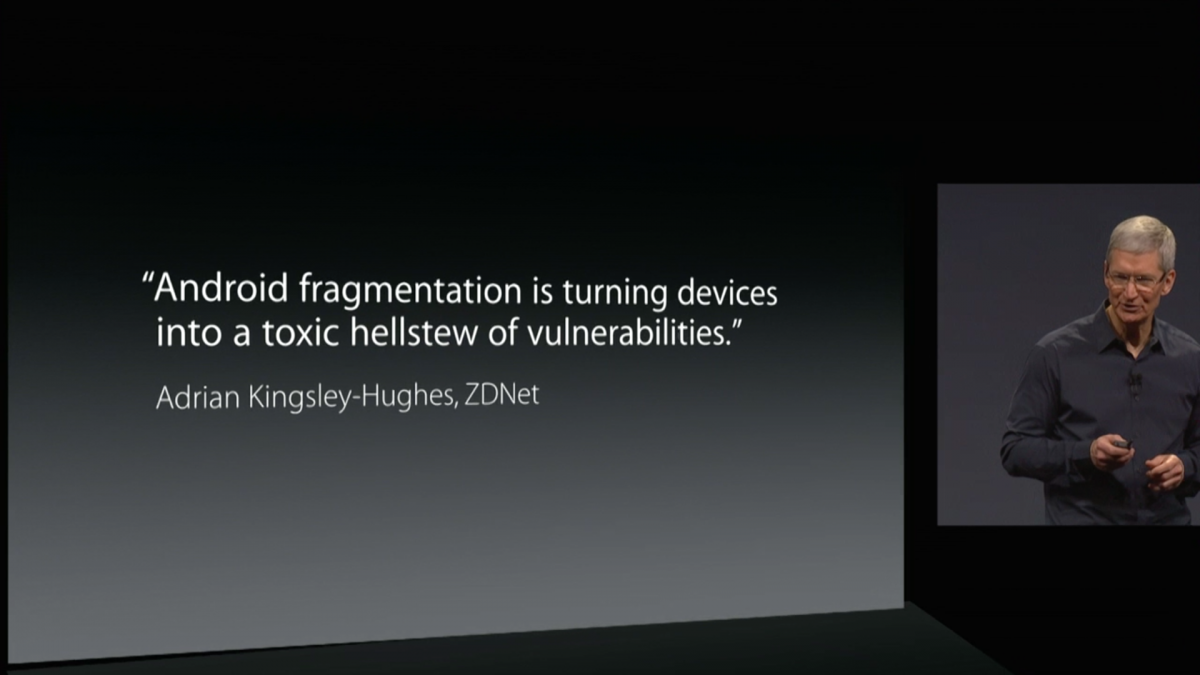
At Apple’s most recent presentation, CEO Tim Cook waned on and on about how secure iOS was compared to Android.
He even went so far as to call Android a “toxic hellstew” of mobile malware.
Android users, of course, know that the stats don’t tell the whole story. Yes, Android is responsible for 99% of mobile malware. However, malware only affects a small percentage of Android users.
Thanks to a new report, Android fans now have some stats to back up their security claims. Specifically, a new report shows that neither Android nor iOS is more secure than the other.
The report was created by Marble Security and labeled with the subheading: “No mobile platform is completely secure: Android and iOS both pose risks to the enterprise.”
Here are the key points from the report:
-Marble Security counted 11,868 different types of Android devices, compared to the dozen or so different devices that run iOS
-Despite Android’s fragmentation and open source nature, the operating system isn’t significantly worse for malware
-Specific app categories are more susceptible to malware than others. Those categories include:
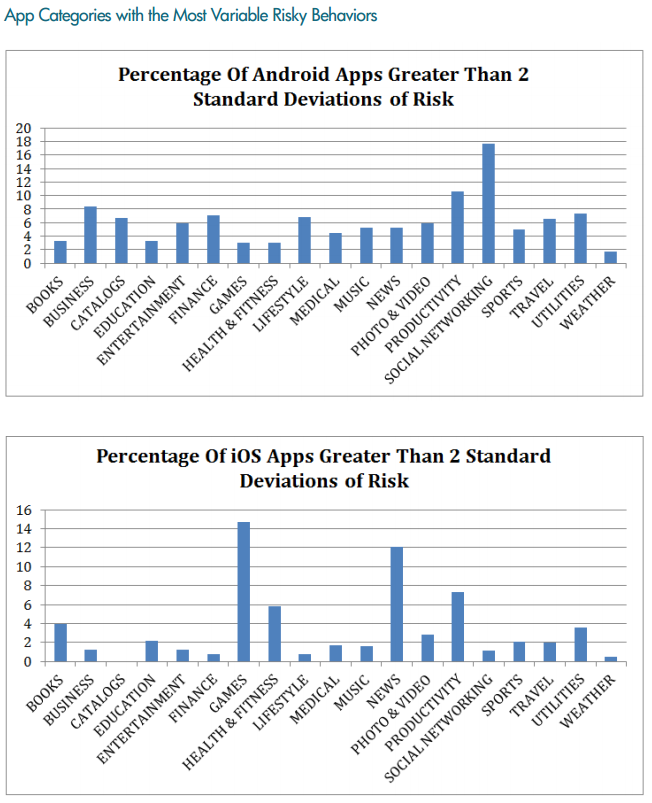
-One of the key differences in terms of malware distribution between iOS and Android lies in the way users download apps. Android users can download from the Google Play Store and many other app stores, while iOS users can only download apps from the iTunes store, where each and every app has been manually approved by Apple.
-However, there are many unofficial ways for apps to break into the “walled garden” of iOS. Apps can be installed using TestFlight, for example, on non-jailbroken iPhones.
-Additionally, iPhone users are subject to mobile attacks via websites. An iPhone user can be lured to a certain website and tempted to click a button to download malware directly to the device, for example. This process is called a mobile device management configuration.
-The chart below shows exactly which vulnerabilities affect Android and which ones affect iOS users. Android is affected by all but one type of threat, while iOS is susceptible to all but three.
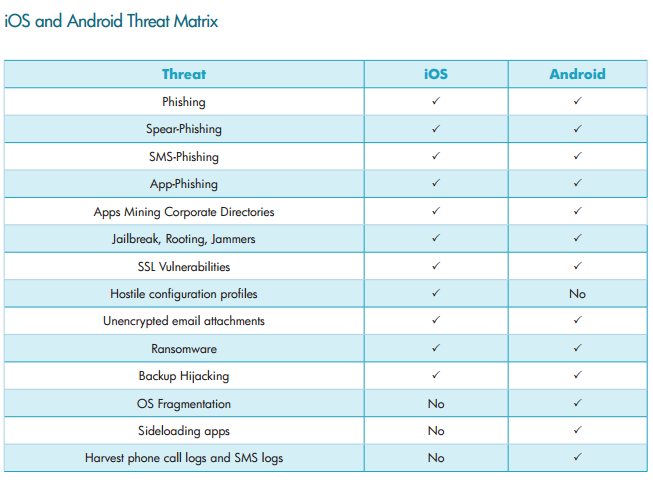
Ultimately, Android is susceptible to certain types of malware – like malware downloaded from app stores – while iOS is susceptible to other kinds of malware – like infected websites.
Calling Android a toxic hellstew of vulnerabilities isn’t nice, and it’s not accurate. Take that, Tim Cook.
Source: MarbleSecurity.com