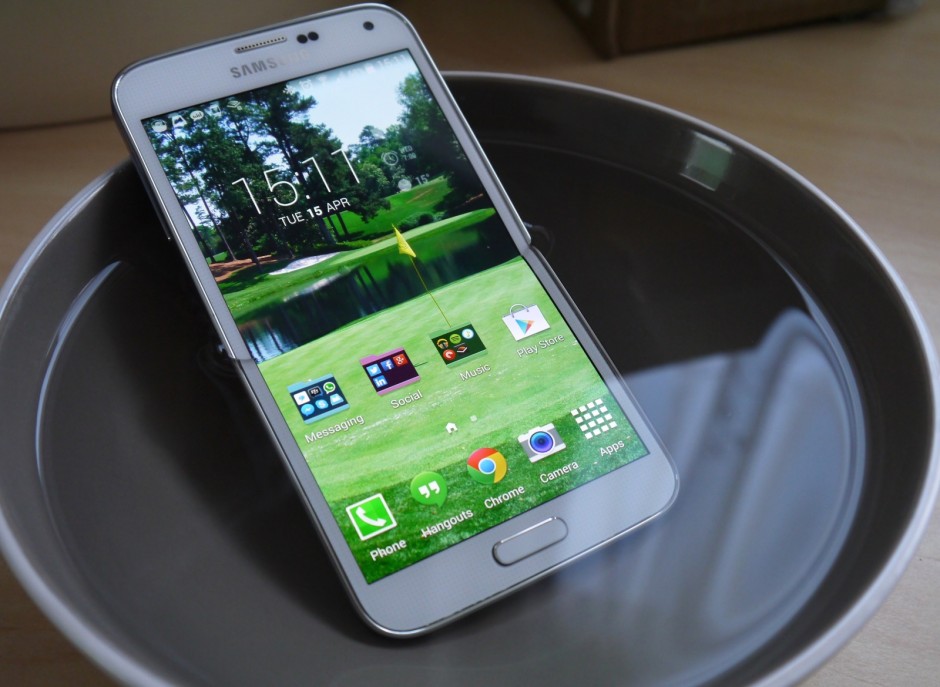
You’ve probably heard about liquid cooled PCs. But one YouTuber recently took liquid cooling a step further by creating water-cooled smartphones.
His system wasn’t
that advanced. Linus Sebastien of LinusTechTips fame recently tested the effects of water cooling smartphones by literally placing the phones in Ziploc bags inside an ice bath.
Then, he activated some performance tests, running GeekBench continually for 10 minutes. Typically, the Snapdragon 810 processor and other high-end processors heat up during this test to a point where it’s dangerous for your phone.
In ice water, however, things changed. Check out the video below to see what happens when you submerge Android flagships inside a plastic bag inside an ice bath.
https://www.youtube.com/watch?v=igoW7FFhJG8
Tested devices in that video include:
-Galaxy S6 Edge
-HTC One M9
-ZTE Axon
-LG G4
-iPhone 6S
Tests were repeated twice: once outside of the water and once inside the bag inside the water.
One of the most amazing parts of this test was that the HTC One M9 was “still actually a little warm, even though it is in water that is definitely cold, that’s amazing”, Linus exclaimed in the video.
Performance Comparison Inside and Outside the Water
Most tested phones exhibited a noticeable performance boost inside the water compared to outside the water (air cooling). Check out the charts below to see the comparison:
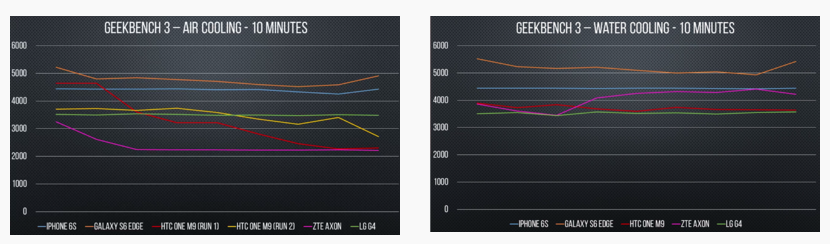
The HTC One M9 shows significant improvements when water cooled. You can see in the first graph how performance plummets as the device heats up. In water, performance remains steady throughout the test.
The ZTE Axon also displayed a significant improvement. Instead of gradually slowing down during the first phase of the test, the Axon’s performance briefly slowed down before boosting back up.
The Snapdragon 810 Has Held Back a Generation of Phones
The infamous overheating problems on the Snapdragon 810 processor have “Held back a generation of phones”
according to XDA-Developers.com:
“This is just another case showing that the 810 has held back a generation of phones. Since it is not practical to carry an ice bath with you everywhere you go many users have looked for a method to deal with excessive heat and the resultant CPU throttling.”
Yikes. That’s a damning indictment. In any case, the next time you need to maximize performance on your smartphone benchmarks, consider grabbing an ice tray, a bucket, and a sturdy Ziploc bag.