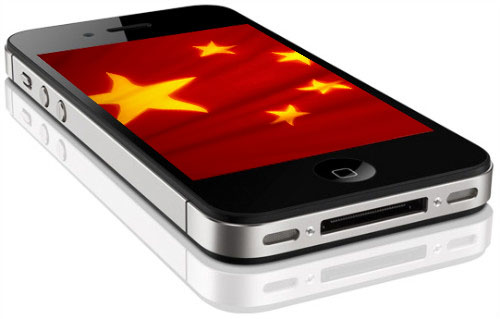
Chinese Government Officially Labels iPhone a Threat to National Security
2 min read
Calling something a “threat to national security” is a pretty big deal.
In freedom-loving countries, that label is typically used to describe atomic bombs or evil dictators. In communist China, however, that label has been applied to an iPhone.
That’s right: the Chinese government has officially labeled the iPhone a threat to national security.
This past week, China’s Central Television network (CCTV), which is run by the state, labeled the iPhone’s “Frequent Location” feature a threat to national security.
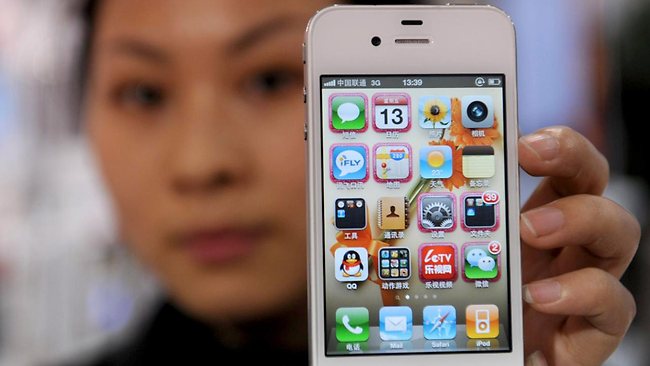
The Frequent Location feature is part of the iPhone’s many location-based services. China fears that Apple is spying on his information to steal Chinese state secrets.
According to Apple, the location data is only stored locally on the device and is never sent to Apple. In addition, the feature can be easily turned off or customized.
That didn’t stop CCTV from airing a report by technology researchers who claimed that the tracking app could expose Chinese state secrets.
In China, the average person cannot afford an iPhone. However, the iPhone is a status symbol and is reportedly popular with corporate executives and government officials – two types of people who are most likely to have access to state secrets.
Of course, China has a right to be frightened. Edward Snowden’s NSA links proved that the US government has massive backdoors into China’s government and corporate networks – a problem that stretches beyond just the iPhone.
Additionally, Apple doesn’t have the best track record for spying. According to numerous reports, the NSA has a “100% success rate” for installing spyware on iPhones and can easily spy on any iPhone user in the world – American citizen or not.
Furthermore, Apple installs software called Carrier IQ onto all its devices. Carrier IQ is tracking software which allows carriers to spy on the way you use your phone.
In other words, Apple doesn’t seem to care too much about user privacy and appears to have willingly complied with every tracking request from both private companies and the US government.
Should the Chinese government be worried? Probably. Maybe it’s time to switch to Android – although I’m not sure Google is any better.
The Frequent Location feature is part of the iPhone’s many location-based services. China fears that Apple is spying on his information to steal Chinese state secrets.
According to Apple, the location data is only stored locally on the device and is never sent to Apple. In addition, the feature can be easily turned off or customized.
That didn’t stop CCTV from airing a report by technology researchers who claimed that the tracking app could expose Chinese state secrets.
In China, the average person cannot afford an iPhone. However, the iPhone is a status symbol and is reportedly popular with corporate executives and government officials – two types of people who are most likely to have access to state secrets.
Apple has a shady history of spying
Of course, China has a right to be frightened. Edward Snowden’s NSA links proved that the US government has massive backdoors into China’s government and corporate networks – a problem that stretches beyond just the iPhone.
Additionally, Apple doesn’t have the best track record for spying. According to numerous reports, the NSA has a “100% success rate” for installing spyware on iPhones and can easily spy on any iPhone user in the world – American citizen or not.
Furthermore, Apple installs software called Carrier IQ onto all its devices. Carrier IQ is tracking software which allows carriers to spy on the way you use your phone.
In other words, Apple doesn’t seem to care too much about user privacy and appears to have willingly complied with every tracking request from both private companies and the US government.
Should the Chinese government be worried? Probably. Maybe it’s time to switch to Android – although I’m not sure Google is any better.

One Click Root Author
Content Writer
Experienced writer covering technology and mobile development.
You Might Also Like
Mobile OSes
Android 14 Root Methods: What Changed?
Explore the new root methods and security changes in Android 14.
Mobile OSes
Latest Android Security Updates Impact Root Access
Understanding how the latest security patches affect root methods.
Mobile OSes
Google Pixel 8 Pro Root Guide Released
Complete step-by-step guide to rooting the Google Pixel 8 Pro.
Comments
JD
John Doe
2 days ago
Great article! Very informative and well-written. Thanks for sharing.
JS
Jane Smith
5 days ago
I found the security section particularly helpful. Looking forward to more content like this!
Leave a Comment
Newsletter
Get the latest tech news delivered to your inbox weekly.
Popular Posts
-
1
Getting Started with Android Development
12.5K views
-
2
Best Practices for Mobile Security
8.2K views
-
3
Understanding Smartphone Hardware
6.8K views